- Teacher: Kristine Bella
Lewis & Clark Moodle
Search results: 1860
- Teacher: Kristine Bella
- Teacher: Missy Satterberg
clinical understanding of theory and art therapy
practice in preparation for internship placement.
This is a required course for all art therapy
students moving into their third year of the
program.
- Teacher: Mary Andrus
clinical understanding of theory and art therapy
practice in preparation for internship placement.
This is a required course for all art therapy
students moving into their third year of the
program.
- Teacher: Jolie Guillebeau
- Teacher: Missy Satterberg
clinical understanding of theory and art therapy
practice in preparation for internship placement.
This is a required course for all art therapy
students moving into their third year of the
program.
- Teacher: Jolie Guillebeau
- Teacher: Kristine Bella
- Teacher: Stephanie Solano
- Teacher: Kristine Bella
- Teacher: Stephanie Solano
- Teacher: Kristine Bella
- Teacher: Stephanie Solano
- Teacher: Kristine Bella
- Teacher: Stephanie Solano
- Teacher: Kristine Bella
Supervised practice bridging theoretical and, clinical skills. Students engage in art therapy, and related professional activities in community, settings. Students prepare art therapy, assessments, submit clinical samples for, supervisory review, and present case findings.
- Teacher: Kristine Bella
- Teacher: Missy Satterberg
- Teacher: Kristine Bella
clinical skills. Students engage in art therapy
and related professional activities in community
settings. Students prepare art therapy
assessments, submit clinical samples for
supervisory review, and present case findings.
- Teacher: Kristine Bella
Supervised practice bridging theoretical and
clinical skills. Students engage in art therapy
and related professional activities in community
settings. Students prepare art therapy
assessments, submit clinical samples for
supervisory review, and present case findings.
- Teacher: Kristine Bella
- Teacher: Stephanie Solano
- Teacher: Kristine Bella
- Teacher: Stephanie Solano
- Teacher: Kristine Bella
- Teacher: Stephanie Solano
- Teacher: Kristine Bella
clinical skills. Students engage in art therapy
and related professional activities in community
settings. Students prepare art therapy
assessments, submit clinical samples for
supervisory review, and present case findings.
- Teacher: Missy Satterberg
clinical skills. Students engage in art therapy
and related professional activities in community
settings. Students prepare art therapy
assessments, submit clinical samples for
supervisory review, and present case findings.
- Teacher: Missy Satterberg
clinical skills. Students engage in art therapy
and related professional activities in community
settings. Students prepare art therapy
assessments, submit clinical samples for
supervisory review, and present case findings.
- Teacher: Missy Satterberg
clinical skills. Students engage in art therapy
and related professional activities in community
settings. Students prepare art therapy
assessments, submit clinical samples for
supervisory review, and present case findings.
- Teacher: Missy Satterberg
- Teacher: Kristine Bella

- Teacher: Beth Ann Short
involvement in personal artistic expression,
creative exploration, and reflection on these
processes through self-inquiry in the role of an
emerging practitioner. Particular attention is
paid to developing understandings of artistic
process as a form of inquiry and the integral
roles of ongoing artistic activity in the
professional identity as an art therapist.
- Teacher: Beth Ann Short
involvement in personal artistic expression,
creative exploration, and reflection on these
processes through self-inquiry in the role of an
emerging practitioner. Particular attention is
paid to developing understandings of artistic
process as a form of inquiry and the integral
roles of ongoing artistic activity in the
professional identity as an art therapist.
- Teacher: Beth Ann Short

- Teacher: Beth Ann Short

- Teacher: Beth Ann Short
involvement in personal artistic expression,
creative exploration, and reflection on these
processes through self-inquiry in the role of an
emerging practitioner. Particular attention is
paid to developing understandings of artistic
process as a form of inquiry and the integral
roles of ongoing artistic activity in the
professional identity as an art therapist.
- Teacher: Mary Andrus
- Teacher: Beth Ann Short
involvement in personal artistic expression,
creative exploration, and reflection on these
processes through self-inquiry in the role of an
emerging practitioner. Particular attention is
paid to developing understandings of artistic
process as a form of inquiry and the integral
roles of ongoing artistic activity in the
professional identity as an art therapist.
- Teacher: Beth Ann Short
used to illustrate the strengths and limitations
of the process of science and the approaches
biologists use to learn about living organisms.
Emphasis changes from semester to semester,
reflecting the expertise and interests of the
faculty member teaching the course. For further
information, consult the appropriate faculty
member before registration. Lecture and
laboratory. May not be applied toward the biology
major.
- Teacher: Randall Long
used to illustrate the strengths and limitations
of the process of science and the approaches
biologists use to learn about living organisms.
Emphasis changes from semester to semester,
reflecting the expertise and interests of the
faculty member teaching the course. For further
information, consult the appropriate faculty
member before registration. Lecture and
laboratory. May not be applied toward the biology
major.
- Teacher: Randall Long
used to illustrate the strengths and limitations
of the process of science and the approaches
biologists use to learn about living organisms.
Emphasis changes from semester to semester,
reflecting the expertise and interests of the
faculty member teaching the course. For further
information, consult the appropriate faculty
member before registration. Lecture and
laboratory. May not be applied toward the biology
major.
- Teacher: Randall Long
- Teacher: Emma Wear
used to illustrate the strengths and limitations
of the process of science and the approaches
biologists use to learn about living organisms.
Emphasis changes from semester to semester,
reflecting the expertise and interests of the
faculty member teaching the course. For further
information, consult the appropriate faculty
member before registration. Lecture and
laboratory. May not be applied toward the biology
major.
- Teacher: Emma Wear
- Teacher: Paulette Bierzychudek
project-based studies of biological phenomena.
Topics in this hands-on course introduce students
to experimental design, data collection, data
analysis, hypothesis testing, and scientific
communication. Topics will vary according to
faculty expertise. See department website for
specific section details.
- Teacher: Heidi Liere

project-based studies of biological phenomena.
Topics in this hands-on course introduce students
to experimental design, data collection, data
analysis, hypothesis testing, and scientific
communication. Topics will vary according to
faculty expertise. See department website for
specific section details.
- Teacher: Kellar Autumn
- Teacher: Randall Long

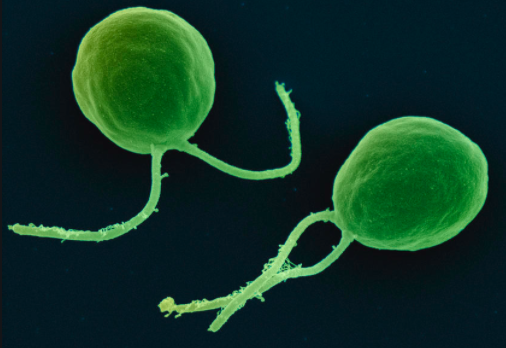
Cilia: Movement to Sensation (Dr. Gewin). This section will explore the formation and function of cilia. These cellular appendages mediate cell swimming and act as antenna, enabling cells to sense their environment. Students will: (1) read and discuss published research on this topic, (2) design and carry out their own research projects using two popular model research organisms Chlamydomonas reinhardtii and Caenorhabditis elegans, and (3) share their results with the rest of the class.
- Teacher: Lindy Gewin
- Teacher: Margaret Metz
- Teacher: Tamily Weissman-Unni
- Teacher: Emma Wear
all of biology, illustrated through
evidence-driven examples centered on integrative
organismal biology and organisms' interactions
with the biotic and physical environment. We will
explore the evolution of life, flow of information
within and among individuals, the influence of
structure on function at scales from individuals
to ecosystems, the transformations of energy and
matter in space and time, and the dynamic systems
that characterize Earth and its inhabitants.
Topics will vary according to faculty expertise.
See department website for specific section
details. Can be taken before or after BIO 202.
- Teacher: Emma Wear
- Teacher: Greta Binford
- Teacher: Margaret Metz
- Teacher: Emma Wear
- Teacher: Greta Binford
- Teacher: Emma Wear
all of biology, illustrated through
evidence-driven examples centered on integrative
organismal biology and organisms' interactions
with the biotic and physical environment. We will
explore the evolution of life, flow of information
within and among individuals, the influence of
structure on function at scales from individuals
to ecosystems, the transformations of energy and
matter in space and time, and the dynamic systems
that characterize Earth and its inhabitants.
Topics will vary according to faculty expertise.
See department website for specific section
details. Can be taken before or after BIO 202.
- Teacher: Emma Wear
An introduction to core principles that underlie, all of biology, illustrated through, evidence-driven examples centered on integrative, organismal biology and organisms' interactions, with the biotic and physical environment. We will, explore the evolution of life, flow of information, within and among individuals, the influence of, structure on function at scales from individuals, to ecosystems, the transformations of energy and, matter in space and time, and the dynamic systems, that characterize Earth and its inhabitants., Topics will vary according to faculty expertise., See department website for specific section, details. Can be taken before or after BIO 202.
- Teacher: Margaret Metz
- Teacher: Emma Wear
all of biology, illustrated through
evidence-driven examples centered on integrative
organismal biology and organisms' interactions
with the biotic and physical environment. We will
explore the evolution of life, flow of information
within and among individuals, the influence of
structure on function at scales from individuals
to ecosystems, the transformations of energy and
matter in space and time, and the dynamic systems
that characterize Earth and its inhabitants.
Topics will vary according to faculty expertise.
See department website for specific section
details. Can be taken before or after BIO 202.
- Teacher: Greta Binford
- Teacher: Margaret Metz
all of biology, illustrated through
evidence-driven examples centered on interactions
among molecules and cells within organisms. We
will explore mechanisms of inheritance and
mutation fundamental to the evolution of life,
flow of information from DNA through proteins to
cellular and organismal function, the relationship
between structure and function at scales from
molecules to individuals, the transformations of
energy and matter through biochemical and
physiological pathways, and the dynamic systems
within and between cells. Topics will vary
according to faculty expertise. See department
website for specific section details. Can be taken
before or after BIO 201.
- Teacher: Tamily Weissman-Unni
An introduction to core principles that underlie
all of biology, illustrated through
evidence-driven examples centered on interactions
among molecules and cells within organisms. We
will explore mechanisms of inheritance and
mutation fundamental to the evolution of life,
flow of information from DNA through proteins to
cellular and organismal function, the relationship
between structure and function at scales from
molecules to individuals, the transformations of
energy and matter through biochemical and
physiological pathways, and the dynamic systems
within and between cells. Topics will vary
according to faculty expertise. See department
website for specific section details. Can be taken
before or after BIO 201.
- Teacher: Jasmine Hopkins
all of biology, illustrated through
evidence-driven examples centered on interactions
among molecules and cells within organisms. We
will explore mechanisms of inheritance and
mutation fundamental to the evolution of life,
flow of information from DNA through proteins to
cellular and organismal function, the relationship
between structure and function at scales from
molecules to individuals, the transformations of
energy and matter through biochemical and
physiological pathways, and the dynamic systems
within and between cells. Topics will vary
according to faculty expertise. See department
website for specific section details. Can be taken
before or after BIO 201.
- Teacher: Tamily Weissman-Unni
- Teacher: Margaret Metz
the arthropods. Introduction to their structure,
development, behavior, natural history, and
evolutionary relationships. Lecture, discussion,
laboratory, field trips.
- Teacher: Greta Binford
morphology, physiology, adaptations to life on
land, and ecological interactions with other
organisms. Emphasis on the roles of plants in
ecosystems and human lives. Key characteristics of
major plant lineages in the context of how plants
have become such a diverse and successful group of
organisms. Students conduct independent research
projects on various aspects of plant biology.
Laboratory.
- Teacher: Margaret Metz
morphology, physiology, adaptations to life on
land, and ecological interactions with other
organisms. Emphasis on the roles of plants in
ecosystems and human lives. Key characteristics of
major plant lineages in the context of how plants
have become such a diverse and successful group of
organisms. Students conduct independent research
projects on various aspects of plant biology.
Laboratory.
- Teacher: Margaret Metz
and biological environment. Ecology of
populations, communities, and ecosystems,
theoretical and empirical approaches. Through
reading original literature and designing their
own studies, students learn to conduct ecological
studies and interpret results. Applications of
ecological principles to conservation issues and
other environmental problems. Lecture and
laboratory; weekend field trip.
- Teacher: Heidi Liere
- Teacher: Randall Long
Mechanisms underlying metabolism, neural
function, muscle, respiration, cardiovascular
systems, acid-base balance, renal function,
osmoregulation, and response to exercise. Focus
on animal physiology, general physiological
principles and responses to system perturbations.
Emphasis on recent experimental discoveries and
unanswered questions. Intended for biology and
biochemistry majors. Lecture and laboratory.
- Teacher: Duncan Parks

- Teacher: Kellar Autumn

- Teacher: Duncan Parks

evolutionary change and of their results. History
of evolutionary thought, evolution of single-gene
and quantitative genetic traits, speciation, and
molecular evolution. Role of evolutionary ideas in
issues such as species conservation, medicine,
science-religion conflicts. Lecture only.
- Teacher: Duncan Parks