- Teacher: Margaret Metz
Lewis & Clark Moodle
Search results: 1915
morphology, physiology, adaptations to life on
land, and ecological interactions with other
organisms. Emphasis on the roles of plants in
ecosystems and human lives. Key characteristics of
major plant lineages in the context of how plants
have become such a diverse and successful group of
organisms. Students conduct independent research
projects on various aspects of plant biology.
Laboratory.
- Teacher: Margaret Metz
and biological environment. Ecology of
populations, communities, and ecosystems,
theoretical and empirical approaches. Through
reading original literature and designing their
own studies, students learn to conduct ecological
studies and interpret results. Applications of
ecological principles to conservation issues and
other environmental problems. Lecture and
laboratory; weekend field trip.
- Teacher: Heidi Liere
- Teacher: Randall Long
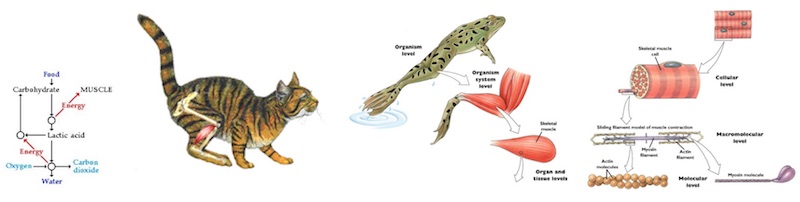
Mechanisms underlying metabolism, neural
function, muscle, respiration, cardiovascular
systems, acid-base balance, renal function,
osmoregulation, and response to exercise. Focus
on animal physiology, general physiological
principles and responses to system perturbations.
Emphasis on recent experimental discoveries and
unanswered questions. Intended for biology and
biochemistry majors. Lecture and laboratory.
- Teacher: Duncan Parks

- Teacher: Kellar Autumn

- Teacher: Duncan Parks

evolutionary change and of their results. History
of evolutionary thought, evolution of single-gene
and quantitative genetic traits, speciation, and
molecular evolution. Role of evolutionary ideas in
issues such as species conservation, medicine,
science-religion conflicts. Lecture only.
- Teacher: Duncan Parks

evolutionary change and of their results. History
of evolutionary thought, evolution of single-gene
and quantitative genetic traits, speciation, and
molecular evolution. Role of evolutionary ideas in
issues such as species conservation, medicine,
science-religion conflicts. Lecture only.
- Teacher: Duncan Parks
- Teacher: Greta Binford
reconstructing hypotheses of evolutionary history.
Modern phylogenetics relies heavily on models of
molecular evolution, thus the course includes a
foundation of molecular evolutionary theory. We
discuss applications of phylogenies including
analyses of gene family evolution, the emergence
of infectious disease, biogeography, and
coevolution. The lab centers on computational
analyses.
- Teacher: Greta Binford
scholarship that explores best practices in
working with transgender and gender diverse
clients (TGDCs) experiencing eating disorders
and/or disordered eating (Eds/DE). This course
will also include an introduction to understanding
the intersections of TGDCs, neurodivergence and
EDs/DE. Ultimately, this course will explore the
prevalence of EDs/DE in transgender communities,
address gaps in current models based on cisgender
populations, and provide TGD and neurodivergent
affirming considerations that reduce barriers to
care, and increase and provide ethical, competent,
and gender-affirming care for all gender diverse
clients.
- Teacher: Xander Hayden
DISABILITY STUDIES AND UNIVERSAL DESIGN:
Every educator will encounter students who meet the criteria for disability within public education and grapple with how to successfully foster learning, equity and inclusion in diverse classrooms and schools. This online course, introduces Disability Studies in Education-- a liberation movement discipline distinct from Special Education-- that offers unique insight into these endeavors and proposes Universal Design as a guiding principle.
Disability Studies proposes that "disability" is contextualized within particular social, cultural and political environments according to the acceptable limits of human variability in those environments. This contrasts with the "medical, model," which positions disability as a deficit inherent to an individual, to be rehabilitated, remediated or cured. Contrasting these two different theoretical models helps us to explore the ideology that may underlie ableism, stigma and privilege. Our inquiry will include lived experience and counter culture narratives associated with various disability groups. We will conclude by investigating how we may employ the principle of Universal Design to create embracive learning environments where all students feel valued and empowered, as well as how we may work to dismantle systemic barriers to equity and inclusion within Education.
Disability Studies intersects with other critical disciplines such as Critical Race Studies, Feminist Studies and Gender Studies, all of which foreground lived experience and de-center dominant narratives that cast particular individuals or groups as the "Other." These intersections are also considered in the course, shedding light on the persistent over-representation of minorities in Special Education and exploring whether disablement may function as a mechanism of marginalization for various groups.
Through assigned readings and communal online discussion among professional peers, we will investigate the philosophical, pedagogical, and pragmatic approaches to dis/ability, equity, and, inclusion in education. Teachers, counselors, administrators, psychologists, specialists and academics should all emerge from this course with the historical context, intellectual framework, and practical skills to deepen their professional practice and help promote social justice-both within the sphere of education and in the wider world.
- Teacher: Denise Herrenbruck
In-depth study of a special topic offered by the, Graduate School of Education and Counseling for the first time or on a, temporary basis.
- Teacher: Sue Feldman
- Teacher: Frances Lessman
- Teacher: Sidney Morgan

- Teacher: Barbara Balko

- Teacher: Barbara Balko
chemistry required for students planning a
professional career in chemistry, a related
science, the health professions, or engineering.
Stoichiometry, atomic structure, chemical bonding
and geometry, thermochemistry, gases, types of
chemical reactions, statistics. Weekly laboratory
exercises emphasizing qualitative and quantitative
techniques that complement the lecture material.
Lecture, discussion, laboratory.
- Teacher: Anne Bentley
- Teacher: Catlin Schalk
Introduction to the general principles of, chemistry required for students planning a, professional career in chemistry, a related, science, the health professions, or engineering., Stoichiometry, atomic structure, chemical bonding, and geometry, thermochemistry, gases, types of, chemical reactions, statistics. Weekly laboratory, exercises emphasizing qualitative and quantitative, techniques that complement the lecture material., Lecture, discussion, laboratory.
- Teacher: Barbara Balko
- Teacher: Anne Bentley
- Teacher: Julio De Paula
- Teacher: Catlin Schalk
- Teacher: Anne Bentley
- Teacher: Julio De Paula
- Teacher: Catlin Schalk

- Teacher: Barbara Balko
- Teacher: Jessica Daniel
- Teacher: Jean-Philippe Gourdine
- Teacher: Nikolaus Loening
- Teacher: Catlin Schalk

- Teacher: Barbara Balko
- Teacher: Jessica Daniel
- Teacher: Julio De Paula
- Teacher: Jean-Philippe Gourdine
- Teacher: Mason Handford
- Teacher: Nikolaus Loening
- Teacher: Catlin Schalk
- Teacher: Yajiao Yu
- Teacher: Julio De Paula
- Teacher: Catlin Schalk

- Teacher: Barbara Balko
- Teacher: Jessica Daniel
- Teacher: Julio De Paula
- Teacher: Nikolaus Loening
- Teacher: Catlin Schalk

- Teacher: Jessica Daniel
- Teacher: Nikolaus Loening
- Teacher: Catlin Schalk
- Teacher: Yajiao Yu
- Teacher: Paul Cleary
- Teacher: Jessica Daniel
- Teacher: Rosie Dodean
- Teacher: Alex Duquette
- Teacher: Mason Handford
- Teacher: Louis Kuo
- Teacher: Ian Schacherer
- Teacher: Jessica Daniel
- Teacher: Louis Kuo
- Teacher: Jessica Daniel
- Teacher: Louis Kuo
- Teacher: Yajiao Yu
and adjacent to the carbonyl group, enolization,
conjugate addition, oxidation, reduction).
Lecture, conference, laboratory. Synthesis,
chemistry of carboxylic acids and derivatives (pKa
of acids, nucleophilic substitution of
derivatives, acyl chlorides, esters, amides,
anhydrides, nitriles). Carbohydrates
(stereochemistry, aldoketoses, aldopentoses,
aldohexoses, ketosugars, derivatives, furanose and
pyranose forms, reducing and nonreducing sugars,
disaccharides and polysaccharides); fats and oils;
aromatic hydrocarbons (benzene, resonance and
molecular orbital approaches, electrophilic and
nucleophilic aromatic substitution); aromatic
nitrogen and oxygen chemistry (diazotization,
synthesis); chemistry of amines, amino acids,
peptides, proteins, DNA; other topics. Lecture,
discussion, laboratory.
- Teacher: Calista Aragon
- Teacher: Jessica Daniel
- Teacher: Louis Kuo
- Teacher: Alister Ng
- Teacher: Hunter Powell
- Teacher: Jessica Daniel
- Teacher: Louis Kuo
- Teacher: Jessica Daniel
- Teacher: Rosie Dodean
- Teacher: Louis Kuo
- Teacher: Yajiao Yu
- Teacher: Jessica Daniel
- Teacher: Rosie Dodean
- Teacher: Louis Kuo
- Teacher: Barbara Balko
- Teacher: Anne Bentley

physical and analytical chemistry and to develop
research aptitude in chemistry. Investigation of
thermochemistry, equilibria, electrochemistry,
kinetics, spectroscopy, photochemistry, and
material science. Techniques used may include
fluorescence, UV-visible, IR, Raman, NMR, and mass
spectroscopies; diffraction; and computational
chemistry. Lecture, laboratory, oral
presentations.
- Teacher: Barbara Balko
- Teacher: Anne Bentley
- Teacher: Catlin Schalk
chemistry with emphasis on bonding, structure,
thermodynamics, kinetics and mechanisms, and
periodic and family relationships. Atomic
structure, theories of bonding, symmetry,
molecular shapes (point groups), crystal
geometries, acid-base theories, survey of familiar
elements, boron hydrides, solid-state materials,
nomenclature, crystal field theory, molecular
orbital theory, isomerism, geometries, magnetic
and optical phenomena, spectra, synthetic methods,
organometallic compounds, cage structures,
clusters, lanthanides, actinides.
- Teacher: Anne Bentley

- Teacher: Nikolaus Loening
- Teacher: Daniel Kimmel
architecture, art, history, literature,
philosophy, and religion. Special emphasis on the
core values of ancient Greek culture, and how
these compare and contrast to our own.
- Teacher: Robert Kugler
- Teacher: Gordon Kelly
- Teacher: Daniel Kimmel
- Teacher: Gordon Kelly
- Teacher: Maureen Healy
- Teacher: Robert Kugler
- Teacher: Maureen Healy
from Classical antiquity: Homer's Iliad and
Odyssey, Apollonius's Argonautica,
Virgil's Aeneid, Lucan's Civil War,
and Statius's Thebaid. Focus on the
traditional themes of the epic genre, including
the nature of heroism, the relationship between
mortals and gods, issues of peace and war, and the
conflict of individual and communal goals; how
ancient authors adapted epic conventions to suit
their own artistic goals; how these epics
reflected the values and history of contemporary
Greco-Roman civilization; and their influence in
antiquity and beyond.
- Teacher: Gordon Kelly
from the Early Republic into late antiquity:
education, religion, marriage, divorce, family
life, reproductive issues, and social status with
an emphasis on actual ancient sources such as
funeral epitaphs, medical texts, inscriptions,
archaeological evidence, letters, historical
writings, and poetry.
- Teacher: Gordon Kelly
Welcome to our April 2025 Clinical Supervision for Professional Counselors 4-day, 30 hour training! All the materials for our four-day training will be available for your review, so please feel free to read ahead if you'd like. Our training will be distance-based, and consist of both live Zoom and "off-line" Moodle assignments, each of which we'll review and clarify along the way.
This training is designed to be both educational and interactive, with a high level of trainee participation encouraged! Feedback from recent Zoom trainings have helped shape this course into a (hopefully) well-paced and user-friendly experience, while still capturing all of the essential elements of the full clinical supervision training.
I look forward to meeting each of you during our first morning of introductions. After a brief survey of your accumulated supervisory experiences, we will move into our training activities. Thank you in advance for your engagement and participation. "See" you on Thursday, April 17, 2025 at 8:30 am!
James Gurule, MA, LPC
Adjunct Faculty
- Teacher: Center for Community Engagement
- Teacher: James Gurule
Welcome to our January 2025 Clinical Supervision for Professional
Counselors 4-day, 30 hour training! All the materials for our four-day
training will be available for your review, so please feel free to read
ahead if you'd like. Our training will be distance-based, and consist of both live Zoom and
"off-line" Moodle assignments, each of which we'll review and clarify
along the way.
This training is designed to be both educational and interactive, with a high level of trainee participation encouraged! Feedback from recent Zoom trainings have helped shape this course into a (hopefully) well-paced and user-friendly experience, while still capturing all of the essential elements of the full clinical supervision training.
I look forward to meeting each of you during our first morning of introductions. After a brief survey of your accumulated supervisory experiences, we will move into our training activities. Thank you in advance for your engagement and participation. "See" you on Thursday, January 23, 2025 at 8:30 am!
James Gurule, MA, LPC
Adjunct Faculty
- Teacher: Center for Community Engagement
- Teacher: James Gurule
Welcome to our July 2025 Clinical Supervision for Professional Counselors 4-day, 30 hour training! All the materials for our four-day training will be available for your review, so please feel free to read ahead if you'd like. Our training will be distance-based, and consist of both live Zoom and "off-line" Moodle assignments, each of which we'll review and clarify along the way.
This training is designed to be both educational and interactive, with a high level of trainee participation encouraged! Feedback from recent Zoom trainings have helped shape this course into a (hopefully) well-paced and user-friendly experience, while still capturing all of the essential elements of the full clinical supervision training.
I look forward to meeting each of you during our first morning of introductions. After a brief survey of your accumulated supervisory experiences, we will move into our training activities. Thank you in advance for your engagement and participation. "See" you on Thursday, July 10, 2025 at 8:30 am!
James Gurule, MA, LPC
Adjunct Faculty
- Teacher: Center for Community Engagement
- Teacher: James Gurule
Welcome to our March April 2026 Clinical Supervision for Professional Counselors 4-day, 30 hour training! All the materials for our four-day training will be available for your review, so please feel free to read ahead if you'd like. Our training will be distance-based, and consist of both live Zoom and "off-line" Moodle assignments, each of which we'll review and clarify along the way.
This training is designed to be both educational and interactive, with a high level of trainee participation encouraged! Feedback from recent Zoom trainings have helped shape this course into a (hopefully) well-paced and user-friendly experience, while still capturing all of the essential elements of the full clinical supervision training.
I look forward to meeting each of you during our first morning of introductions. After a brief survey of your accumulated supervisory experiences, we will move into our training activities. Thank you in advance for your engagement and participation.
James Gurule, MA, LPC
Adjunct Faculty
- Teacher: Center for Community Engagement
- Teacher: James Gurule
Welcome to our May 2025 Clinical Supervision for Professional
Counselors 4-day, 30 hour training! All the materials for our four-day
training will be available for your review, so please feel free to read
ahead if you'd like. Our training will be distance-based, and consist of both live Zoom and
"off-line" Moodle assignments, each of which we'll review and clarify
along the way.
This training is designed to be both educational and interactive, with a high level of trainee participation encouraged! Feedback from recent Zoom trainings have helped shape this course into a (hopefully) well-paced and user-friendly experience, while still capturing all of the essential elements of the full clinical supervision training.
I look forward to meeting each of you during our first morning of introductions. After a brief survey of your accumulated supervisory experiences, we will move into our training activities. Thank you in advance for your engagement and participation. "See" you on Thursday, May 22 2025 at 8:30 am!
James Gurule, MA, LPC
Adjunct Faculty
- Teacher: Center for Community Engagement
- Teacher: James Gurule
Welcome to our February 2026 Clinical Supervision for Professional Counselors 4-day, 30 hour training! All the materials for our four-day training will be available for your review, so please feel free to read ahead if you'd like. Our training will be distance-based, and consist of both live Zoom and "off-line" Moodle assignments, each of which we'll review and clarify along the way.
This training is designed to be both educational and interactive, with a high level of trainee participation encouraged! Feedback from recent Zoom trainings have helped shape this course into a (hopefully) well-paced and user-friendly experience, while still capturing all of the essential elements of the full clinical supervision training.
I look forward to meeting each of you during our first morning of introductions. After a brief survey of your accumulated supervisory experiences, we will move into our training activities. Thank you in advance for your engagement and participation.
James Gurule, MA, LPC
Adjunct Faculty
- Teacher: Center for Community Engagement
- Teacher: James Gurule
Welcome to our January 2025 Clinical Supervision for Professional
Counselors 4-day, 30 hour training! All the materials for our four-day
training will be available for your review, so please feel free to read
ahead if you'd like. Our training will be distance-based, and consist of both live Zoom and
"off-line" Moodle assignments, each of which we'll review and clarify
along the way.
This training is designed to be both educational and interactive, with a high level of trainee participation encouraged! Feedback from recent Zoom trainings have helped shape this course into a (hopefully) well-paced and user-friendly experience, while still capturing all of the essential elements of the full clinical supervision training.
I look forward to meeting each of you during our first morning of introductions. After a brief survey of your accumulated supervisory experiences, we will move into our training activities. Thank you in advance for your engagement and participation. "See" you on Thursday, January 23, 2025 at 8:30 am!
James Gurule, MA, LPC
Adjunct Faculty
- Teacher: Center for Community Engagement
- Teacher: James Gurule
Welcome to our August 2025 Clinical Supervision for Professional Counselors 4-day, 30 hour training! All the materials for our four-day training will be available for your review, so please feel free to read ahead if you'd like. Our training will be distance-based, and consist of both live Zoom and "off-line" Moodle assignments, each of which we'll review and clarify along the way.
This training is designed to be both educational and interactive, with a high level of trainee participation encouraged! Feedback from recent Zoom trainings have helped shape this course into a (hopefully) well-paced and user-friendly experience, while still capturing all of the essential elements of the full clinical supervision training.
I look forward to meeting each of you during our first morning of introductions. After a brief survey of your accumulated supervisory experiences, we will move into our training activities. Thank you in advance for your engagement and participation. "See" you on Thursday, July 10, 2025 at 8:30 am!
James Gurule, MA, LPC
Adjunct Faculty
- Teacher: Center for Community Engagement
- Teacher: James Gurule
Welcome to our December 2025 Clinical Supervision for Professional Counselors 4-day, 30 hour training! All the materials for our four-day training will be available for your review, so please feel free to read ahead if you'd like. Our training will be distance-based, and consist of both live Zoom and "off-line" Moodle assignments, each of which we'll review and clarify along the way.
This training is designed to be both educational and interactive, with a high level of trainee participation encouraged! Feedback from recent Zoom trainings have helped shape this course into a (hopefully) well-paced and user-friendly experience, while still capturing all of the essential elements of the full clinical supervision training.
I look forward to meeting each of you during our first morning of introductions. After a brief survey of your accumulated supervisory experiences, we will move into our training activities. Thank you in advance for your engagement and participation.
James Gurule, MA, LPC
Adjunct Faculty
- Teacher: Center for Community Engagement
- Teacher: James Gurule
Welcome to our August 2025 Clinical Supervision for Professional Counselors 4-day, 30 hour training! All the materials for our four-day training will be available for your review, so please feel free to read ahead if you'd like. Our training will be distance-based, and consist of both live Zoom and "off-line" Moodle assignments, each of which we'll review and clarify along the way.
This training is designed to be both educational and interactive, with a high level of trainee participation encouraged! Feedback from recent Zoom trainings have helped shape this course into a (hopefully) well-paced and user-friendly experience, while still capturing all of the essential elements of the full clinical supervision training.
I look forward to meeting each of you during our first morning of introductions. After a brief survey of your accumulated supervisory experiences, we will move into our training activities. Thank you in advance for your engagement and participation. "See" you on Thursday, July 10, 2025 at 8:30 am!
James Gurule, MA, LPC
Adjunct Faculty
- Teacher: Center for Community Engagement
- Teacher: James Gurule
- Teacher: Lydia Loren
- Teacher: William Pritchard
- Teacher: Ian McDonald
- Teacher: Susan Glosser
This section will focus on one of the key features of being a literate and active member of a democracy: the ability to locate, think about, and make arguments with data. While we will indeed use numbers to explore the scientific and social ramifications of alcohol and substance use, this will not be a “math” class in the conventional sense. Nor, it must be said, will this be a “humanities” class in the conventional sense. We will likely spend less time dissecting texts than other E&D sections, or at least not in the same way. Instead, we will think about how quantitative reasoning can shape and strengthen arguments about academic research, public policy, literature, and the choices we make in our daily lives.
- Teacher: Todd Watson
This course examines these and other questions about the relationship between healing, spirituality, and culture by reading and discussing scholarship from the fields of religious studies, anthropology, sociology, and history. We will look at examples from a variety cultural contexts including ancient Greek, Chinese and Native American traditions. We will pay particular attention to the way in which dominant frameworks of authority for explaining sickness and health have changed over the last 200 years in the West, leading us to inquire into the contemporary appeal of “alternative medicine” in Portland in 2020.
- Teacher: Jessica Starling
- Teacher: Todd Watson
- Teacher: Heather Colombo
significance of texts via close reading and
analysis, and to express that analysis orally and
in writing. Specific content and topics will vary
with instructors.
- Teacher: Kabir Heimsath

- Teacher: Joel Sweek

- Teacher: Joel Sweek
- Teacher: Catherine Sprecher Loverti
significance of texts via close reading and
analysis, and to express that analysis orally and
in writing. Specific content and topics will vary
with instructors.
- Teacher: Catherine Sprecher Loverti
significance of texts via close reading and
analysis, and to express that analysis orally and
in writing. Specific content and topics will vary
with instructors.
- Teacher: Catherine Sprecher Loverti
- Teacher: Dawn Odell
- Teacher: Jadee Carathers
- Teacher: Catherine Sprecher Loverti
- Teacher: Paul Powers

- Teacher: William Pritchard
Course Description: 120-03
THE ROMANTIC GENERATION
The words “Romantic” and “Romanticism” hold a myriad of meanings for most of us. We watch “Rom-Com” films, see ads that sell “Romantic” products and experiences, and listen to Romantic music. In this course we will investigate the origins of Romanticism, the philosophical ideas and ideals that galvanized a generation of writers, artists and musicians, read, hear, and study the music and literature of the 19th- century Romantic artists, and spend some time reading critiques of their work by their contemporaries and more current writers. We will investigate the role of the artist (music, literature and art) in 19th-century society, the and search for parallels between the 19th century and our own time. Finally, we will look at how the ethos of the 19th century has shaped our own experiences as creators and consumers of art. Are we, ourselves, a generation of 21st-century Romanticists?
- Teacher: Susan Smith
significance of texts via close reading and
analysis, and to express that analysis orally and
in writing. Specific content and topics will vary
with instructors.
- Teacher: Maureen Healy
significance of texts via close reading and
analysis, and to express that analysis orally and
in writing. Specific content and topics will vary
with instructors.
- Teacher: Michael Mirabile
- Teacher: William Pritchard

- Teacher: Joel Sweek
- Teacher: Susanna Morrill
- Teacher: Michael Mirabile