- Teacher: Todd Watson
Lewis & Clark Moodle
Search results: 310

Credit may not be earned for both, this course and AP statistics.
- Teacher: Todd Watson

You can't earn credit for both Psy 200 and AP/IB Statistics
- Teacher: Todd Watson

- Teacher: Todd Watson

Not open to students with previous credit in PSY 350 or PSY 355.
- Teacher: Todd Watson
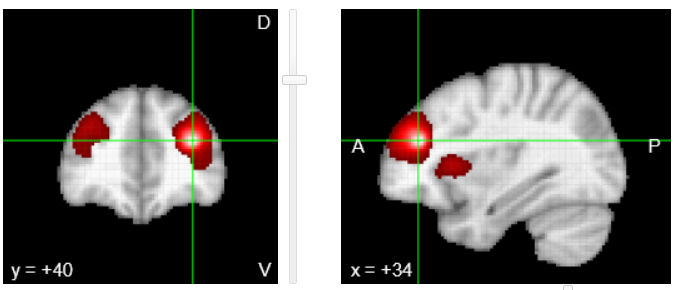
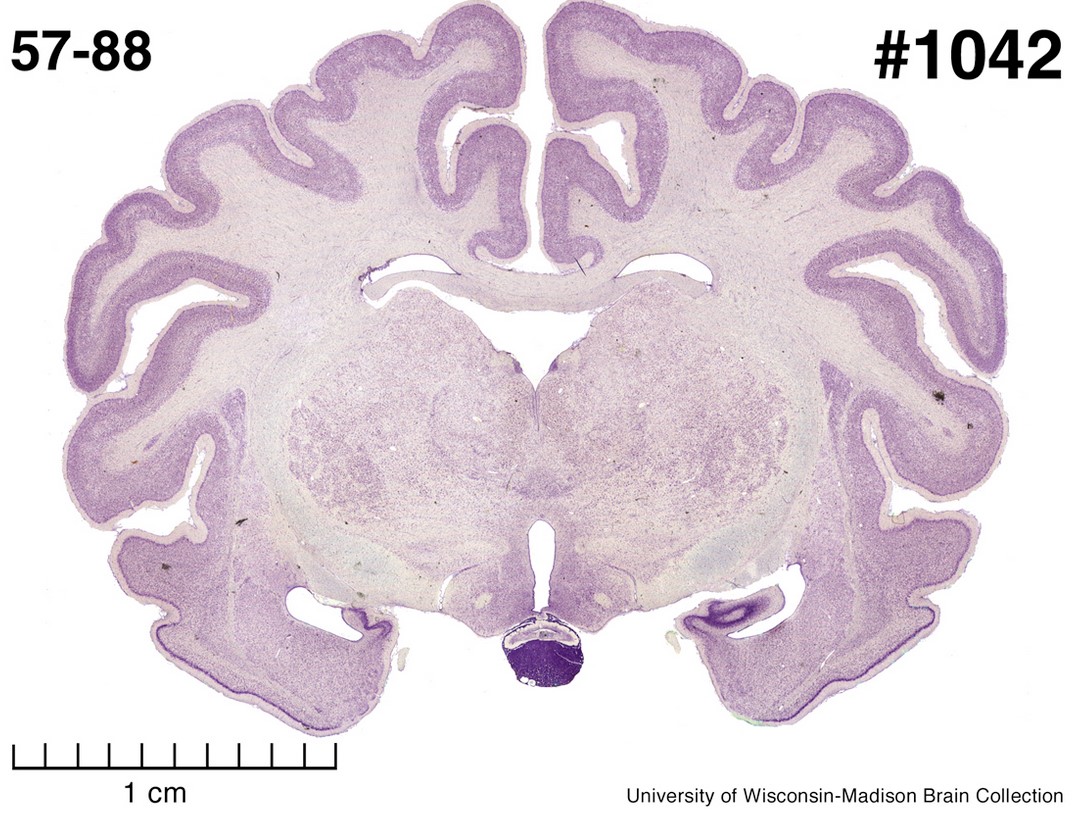
We will survey some of the physiological processes that are related to the control of behavior in human and nonhuman species, as well as other biological mechanisms that are relevant to issues in psychology. Specific topics include basic functional neuroanatomy, the structure and function of neurons and neuronal transmission, and the relationship between brain systems and complex behaviors, cognition, and emotions. Neurological, neuropsychological, and psychiatric disorders will also be discussed. In addition to serving as a general survey of the biological aspects of psychology, this course will help prepare students for more advanced study in behavioral and cognitive neuroscience (e.g., Psy 350 and Psy 355).
Students who have received credit for PSY/BIO 252, should not enroll in this course. Not open to, students with previous credit in PSY 350 or PSY 355.
- Teacher: Todd Watson

Students who have received credit for PSY/BIO 252, should not enroll in this course. Not open to students with previous credit in PSY 350 or PSY, 355.
- Teacher: Todd Watson

Students who have received credit for PSY/BIO 252, should not enroll in this course. Not open to, students with previous credit in PSY 350 or PSY, 355.
- Teacher: Todd Watson
Note, you cannot receive credit for this course if you have already taken Psy/Bio 252 (Introduction to Neuroscience) or Psy 355 (Cognitive Neuroscience)
- Teacher: Todd Watson

Students who have received credit for PSY/BIO 252, should not enroll in this course. Not open to students with previous credit in PSY 350 or PSY, 355.
- Teacher: Todd Watson

processes and underlying functions of the nervous
system. Biological bases of sensation, perception,
motivation, emotion, learning, memory,
psychopathology. Laboratory sections supplement
lectures and readings with practical experience in
neural anatomy, animal (rat) behavioral testing,
and neuropsychological testing. Seniors will be
given registration preference during the first
round of registration.
- Teacher: Christopher Collins
- Teacher: Diana Leonard
- Teacher: Todd Watson
- Teacher: Yueping Zhang

- Teacher: Todd Watson

- Teacher: Todd Watson

- Teacher: Todd Watson

- Teacher: Todd Watson

- Teacher: Todd Watson

- Teacher: Todd Watson

- Teacher: Todd Watson
of females, their attitudes, values, behaviors,
and self-image. Alternative models for increasing
gender-role flexibility and allowing all humans to
explore their full potential. Research
methodology, changing roles, androgyny, gender
schema, extent and validity of gender differences.
Influence of culture, socialization, and
individual differences on women and men.
Relationship between the psychology of gender and
principles of feminism.
- Teacher: Irene Hilman
- Teacher: Jolina Ruckert
- Teacher: Hazel Wilton-Green
of females, their attitudes, values, behaviors,
and self-image. Alternative models for increasing
gender-role flexibility and allowing all humans to
explore their full potential. Research
methodology, changing roles, androgyny, gender
schema, extent and validity of gender differences.
Influence of culture, socialization, and
individual differences on women and men.
Relationship between the psychology of gender and
principles of feminism.
- Teacher: Jolina Ruckert

- Teacher: Orlando Impas
- Teacher: Jolina Ruckert
Examination of topics in psychology from a
multicultural, multiethnic perspective, with
special emphasis on cultural influence on research
methods, self-concept, communication, emotion,
social behavior, development, mental health.
Cultural variation, how culture shapes human
behavior, and psychological theories and practices
in different cultures.
- Teacher: Nichole Champion
- Teacher: Diana Leonard
- Teacher: Yueping Zhang
American religions, and American popular culture;
how food is incorporated into formal religious
rituals such as the Eucharist or fasting; how
cooking, communal eating, and food practices are
part of the more informal religious culture of
religious communities. Also, consideration of
whether eating and food have taken on religious
meaning within American culture as a whole, using
the Northwest as a focus.
- Teacher: Susanna Morrill
human beings have sought to make sense of their
world through apocalyptic speculation; exploration
of the special relationship between end-time
speculation and religious thought and practice.
Sources include literature ranging from ancient
Mesopotamian apocalypses to Zora Neale Hurston's
Their Eyes Were Watching God, art and
architecture from the Ishtar Gate of Babylon to
Garden Grove's Crystal (now Christ) Cathedral, and
expressions of popular culture from ancient Greek
curse tablets to "Zombieland."
- Teacher: Robert Kugler

- Teacher: Jessica Starling

- Teacher: Jessica Starling
- Teacher: Daniel Kimmel
The self and its transformation: How have various East Asian religions understood the self and its potential for spiritual development? What paths for self-cultivation and liberation are offered by these traditions?
Religion and the state: What kinds of relationships have existed between religion and the state in East Asia?
Religious mixing and competition: What has been the relationship between different religious traditions within a particular cultural milieu? In what ways are they competing, and in what ways are they reconciled?
Religion and modernity: How has modernity affected the function and jurisdiction of religion in East Asian countries?
The course is not meant to comprehensively represent East Asian religious traditions, but rather to examine closely a few examples that richly illustrate the complexity of the above questions. Nonetheless, students will develop a strong foundation of knowledge about the religious landscape of East Asia, and a basic understanding of the doctrines and practices of various traditions.
- Teacher: Jessica Starling
of the Civil War to the present day, emphasizing
the interaction between America's many religions
and emerging American modernity. The fate of
"traditional" religion in modern America;
"alternate" American religious traditions;
urbanization, industrialism, and religion;
science, technology, and secularism;
evangelicalism, modernism, and fundamentalism;
religious bigotry; pluralism; new religions and
neofundamentalism.
- Teacher: Susanna Morrill
Mormonism in the U.S. as a case study to
understand larger trends in American religious
history, including the history and importance of
folk and magical traditions in the U.S.,
prophetic/charismatic religious movements, the
shifting relationship between church and state,
public Protestantism in the U.S., secularization,
and globalization.
- Teacher: Susanna Morrill
- Teacher: Daniel Kimmel
- Teacher: Jessica Starling

- Teacher: Bryan Sebok

of messages for film and television. Organizing
principles and aesthetic theories concerning
connections between form and content, text and
audience. Topics include narrative style and
structure, visual composition, continuity and
montage, and basic production practices in image
creation, audio, and editing.
- Teacher: Bryan Sebok

- Teacher: Bryan Sebok

- Teacher: Bryan Sebok

- Teacher: Bryan Sebok

- Teacher: Bryan Sebok

- Teacher: Bryan Sebok
- Teacher: Melanie Kohnen
of messages for film and television. Organizing
principles and aesthetic theories concerning
connections between form and content, text and
audience. Topics include narrative style and
structure, visual composition, continuity and
montage, and basic production practices in image
creation, audio, and editing.
- Teacher: Melanie Kohnen
of messages for film and television. Organizing
principles and aesthetic theories concerning
connections between form and content, text and
audience. Topics include narrative style and
structure, visual composition, continuity and
montage, and basic production practices in image
creation, audio, and editing.
- Teacher: Melanie Kohnen

skills needed for effective career counseling and
consultation in educational settings. Students
will explore a comprehensive range of topics
related to the interrelationships between work,
mental well-being, relationships, and other life
roles and factors. Key standards covered include
career theories, ethical and culturally relevant
strategies for addressing career development,
career information systems, career-focused
assessments, core curriculum planning, and
advocacy. Students will become proficient
career-focused school counselors prepared to work
with diverse K-12 students' needs in school
environments through the integration of theory and
practice. By the end of the course, students will
be well-prepared to serve as knowledgeable and
ethical career-focused school counselors and
consultants in school settings.
- Teacher: Tamara Tribitt
skills needed for effective career counseling and
consultation in educational settings. Students
will explore a comprehensive range of topics
related to the interrelationships between work,
mental well-being, relationships, and other life
roles and factors. Key standards covered include
career theories, ethical and culturally relevant
strategies for addressing career development,
career information systems, career-focused
assessments, core curriculum planning, and
advocacy. Students will become proficient
career-focused school counselors prepared to work
with diverse K-12 students' needs in school
environments through the integration of theory and
practice. By the end of the course, students will
be well-prepared to serve as knowledgeable and
ethical career-focused school counselors and
consultants in school settings.
- Teacher: Tianka Pharaoh

- Teacher: Renee Caballero
- Teacher: Tamara Tribitt

- Teacher: Tamara Tribitt
- Teacher: Sarah Warren
- Teacher: Sidra Kamran
- Teacher: Maryann Bylander
society is organized and operates; the
relationship between social institutions and the
individual; sources of conformity and conflict;
the nature of social change.
- Teacher: Sarah Warren
society is organized and operates; the
relationship between social institutions and the
individual; sources of conformity and conflict;
the nature of social change.
- Teacher: Jadee Carathers
- Teacher: Sarah Warren
- Teacher: Jadee Carathers
FALL 2021: SOAN 110-01 INTRODUCTION TO CULTURAL ANTHROPOLOGY
MWF @ 9:10 – 10:10am, Miller Center, Room 205
COURSE INTRO: Anthropology is a four-field discipline, but cultural anthropology is the study of lived human experience as it is represented in and by symbolic, material, and virtual culture. Anthropologists, attend closely to everyday relationships between individuals and their immediate communities. Yet, we also study culture in the context of globalization because few individuals or particular cultural formations are isolated (or ever have been!) from broader political, market, and technological shifts. We have some standard and evolving methodological tools to facilitate our research and involvements in . Thus, anthropologists also study the varied forms of structural power that marshal the world’s inhabitants—human and otherwise—into complex networks! Our pace for this class is moderate.
- Teacher: Kim Cameron-Dominguez
- Teacher: Oren Kosansky
Why do some people have more opportunities in life
than others? What produces power differentials
between people? Exploration of the structural
factors that produce inequality (such as class,
race, and gender); the material, cultural, and
affective dimensions of experiencing inequality;
and possible solutions to contemporary inequality.
- Teacher: Sidra Kamran
- Teacher: Kabir Heimsath
- Teacher: Maryann Bylander
- Teacher: Kabir Heimsath
research as applied to the process of learning
and education, age birth to twenty-one. Emphasis
will be placed in the following areas: candidates
gaining knowledge to both differentiate and
integrate multiple theoretical views on
development; candidates gaining a better
conceptual understanding of commonalities and
differences in development; and, candidates
gaining a better practical understanding of how
to help children and adolescents address the
developmental challenges they face, particularly
in schools. In this course, child and adolescent
development will be viewed through theories and
research in the areas of interpersonal,
emotional, cultural, cognitive, and physical
development.
- Teacher: Andrea Dennison
- Teacher: Bich Do
A Colloquium is an academic seminar on a broad, field of study, usually led by a different, lecturer at each meeting. This Colloquium will be, focused on the broad field of School Psychology,, and all candidates across all three cohorts of, the school psychology program are required to, attend in order to address, together, relevant, topics of the profession that concern us all. The, Colloquium meets four times per academic year,, with a different topic as the focus for each, meeting. These four topics include: 1) Issues in, Practicum and Internship Supervision; 2), Variations of the Practice of School Psychology;, 3) Alumni Relations and Mentorship; and 4), Cross-Professional Collaboration. The School, Psychology Colloquium challenges school, psychology candidates to address issues of, concern across all three cohorts while, simultaneously providing mentorship across these, cohorts through conversation, guidance, and, shared information. Course goals for participants, include: a. Engaging with the data, research and, theory regarding topics of shared concern in the, field of school psychology b. Gaining an, understanding of the practices of mentorship,, supervision and on-going professional development, in the field of school psychology c. Gaining an, understanding of the variation and different, forms of practice within the field of school, psychology at the local, national and, international level. d. Engaging with related, professionals in the field of education regarding, topics of shared concern in an effort to better, differentiate and integrate as working, professionals.
- Teacher: Elena Diamond
- Teacher: Kate Jaspers
- Teacher: Peter Mortola
A Colloquium is an academic seminar on a broad, field of study, usually led by a different, lecturer at each meeting. This Colloquium will be, focused on the broad field of School Psychology,, and all candidates across all three cohorts of, the school psychology program are required to, attend in order to address, together, relevant, topics of the profession that concern us all. The, Colloquium meets four times per academic year,, with a different topic as the focus for each, meeting. These four topics include: 1) Issues in, Practicum and Internship Supervision; 2), Variations of the Practice of School Psychology;, 3) Alumni Relations and Mentorship; and 4), Cross-Professional Collaboration. The School, Psychology Colloquium challenges school, psychology candidates to address issues of, concern across all three cohorts while, simultaneously providing mentorship across these, cohorts through conversation, guidance, and, shared information. Course goals for participants, include: a. Engaging with the data, research and, theory regarding topics of shared concern in the, field of school psychology b. Gaining an, understanding of the practices of mentorship,, supervision and on-going professional development, in the field of school psychology c. Gaining an, understanding of the variation and different, forms of practice within the field of school, psychology at the local, national and, international level. d. Engaging with related, professionals in the field of education regarding, topics of shared concern in an effort to better, differentiate and integrate as working, professionals.
- Teacher: Elena Diamond
- Teacher: Jennifer Twyford
- Teacher: Shanna Davis
This group is a Forum for communication between student-athletes and mentors.
readings, and discussion to explore structural and
functional aspects of the body and anatomy with
the goal of increasing efficiency of movement and
physical coordination. Use of imagery supports
dynamic alignment, breath, mobility/stability,
relaxation, and partner work including massage,
with a main focus on the skeletal system and
elements of muscle and organ systems, as well as
the relationship between the body and
psychological/emotional patterns. Extensive
journal writing.
- Teacher: Susan Davis
- Teacher: Eric Nordstrom
- Teacher: Susan Davis

- Teacher: Eric Nordstrom

readings, and discussion to explore structural and
functional aspects of the body and anatomy with
the goal of increasing efficiency of movement and
physical coordination. Use of imagery supports
dynamic alignment, breath, mobility/stability,
relaxation, and partner work including massage,
with a main focus on the skeletal system and
elements of muscle and organ systems, as well as
the relationship between the body and
psychological/emotional patterns. Extensive
journal writing.
- Teacher: Eric Nordstrom

- Teacher: Eric Nordstrom
readings, and discussion to explore structural and
functional aspects of the body and anatomy with
the goal of increasing efficiency of movement and
physical coordination. Use of imagery supports
dynamic alignment, breath, mobility/stability,
relaxation, and partner work including massage,
with a main focus on the skeletal system and
elements of muscle and organ systems, as well as
the relationship between the body and
psychological/emotional patterns. Extensive
journal writing.
- Teacher: Susan Davis
Use of guided movement explorations, partner work,, readings, and discussion to explore structural and, functional aspects of the body and anatomy with, the goal of increasing efficiency of movement and, physical coordination. Use of imagery supports, dynamic alignment, breath, mobility/stability,, relaxation, and partner work including massage,, with a main focus on the skeletal system and, elements of muscle and organ systems, as well as, the relationship between the body and, psychological/emotional patterns. Extensive, journal writing.
- Teacher: Eric Nordstrom

- Teacher: Eric Nordstrom
- Teacher: Susan Davis